ADA-Compliant Portable Restrooms and the Significance of Accessible Routes
When individuals discuss an ada compliant portable restroom, they typically focus on the device itself. Is it large sufficient? Does it have the best icon on the door? Was the right design supplied? Those questions issue, however they miss an issue that turns up regularly in the field. A restroom can be practically easily accessible in isolation and still be pointless if no person can reach it securely and independently.
That gap between the unit and the course is where a lot of ease of access failures happen.
I have actually seen coordinators spend real cash on ada certified mobile restrooms, only to place them beyond soft lawn, loose crushed rock, curb sides, or a steep temporary ramp that looked penalty from 10 feet away but did not help the person that needed it. The outcome is frustrating for visitors, shaming for coordinators, and risky from a conformity point ofview. Accessibility is not just about having an ada mobile restroom on website. It is about developing a usable path to it, a functional entrance, and enough room around it so an individual can approach, go into, and utilize it with dignity.
That is the practical heart of the ADA standards for mobile systems. The toilet matters, and the course matters equally as much.
Accessibility starts prior to the door
Under the managing federal availability standard in the United States, the 2010 ADA Requirements for Accessible Design govern this area, as analyzed by the Access Board and the Division of Justice. For portable bathroom arrangements, that indicates the conversation is more comprehensive than the shell of the unit. The criteria deal with the available route, the entry, and any kind of ramps or touchdowns that may be called for. They additionally address the technical needs inside the commode area itself, including component clearances, transforming area, navigating clearances at doors, and relevant grab bar and water storage room clearance rules.
That can sound abstract up until you picture an actual event site.
Imagine an event with twenty portable systems aligned along a field. One system is marked as the ada handicap obtainable mobile washroom. Theoretically, a person may really feel the task is done. But if that unit rests at the back of a muddy slope, behind a line of standard devices that narrows the approach, or on irregular ground that changes after light rain, then the person that requires the accessible unit is the one doing added job, taking added risk, and depending upon added help. That is exactly the sort of end result ease of access criteria are implied to prevent.
An available path is not a side concern. It is the problem that makes the toilet genuinely available.
What the ADA really requires for mobile washroom clusters
One of the clearest policies in this location puts on collections of portable single-user toilet devices. At the very least 5 percent of the systems in each collection should be accessible. The Access Board has actually made clear that this applies also at momentary events.
That point issues because momentary setups are usually dealt with as well casually. There is a sticking around presumption that if something is just in position for a weekend, the ease of access rules in some way soften. They do not. Momentary does not mean exempt.
For occasion planners, website supervisors, and companies dealing with an ada mobile commode leasing, this 5 percent rule must be part of the earliest preparation discussion, not a last-minute change. Waiting until shipment day produces predictable troubles. The appropriate accessible system may be readily available, yet the space gotten ready for it https://pristineportablesil.com/government/ might not be. The count may practically function, yet the positioning may stop working. The course might look serviceable up until foot web traffic, climate, fence, or supplier equipment adjustments just how people move with the site.
A cluster also requires to be recognized as a cluster. If mobile systems are grouped in various areas, the obtainable count has to be thought about in each grouping, not just as an overall number spread across the property. That is the sort of information that gets overlooked when groups are hurrying with logistics.
The symbol on the door is only the beginning
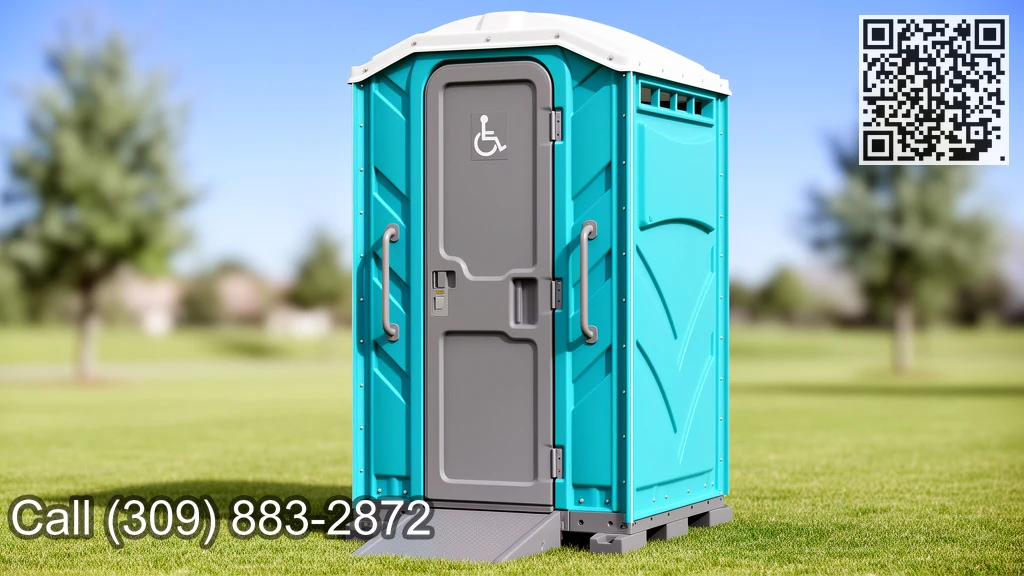
Accessible portable toilet units need to be related to the International Sign of Ease Of Access. That is a vital requirement, and it offers a sensible purpose. Clear recognition helps individuals locate the unit meant for accessible use without complication or the need to request for assistance.
Still, the icon can develop an incorrect sense of security for organizers. The visible marker is easy to examine. It feels like evidence. But the harder component is whatever around the unit. If the route is unattainable, the significant system ends up being a guarantee the website does not actually keep.
I have seen this tension at community events where the available device was provided appropriately and identified correctly, yet positioned behind group control barriers with a narrow swing path. No one included was trying to leave out any individual. The concern was more regular than that. One crew took care of toilet positioning. An additional dealt with barriers. An additional took care of utilities. Each team made a small decision that made sense in isolation. Created, those choices obstructed access.
That is why obtainable transmitting needs a single person, or one collaborated team, looking at the whole experience from arrival to exit.
Why obtainable routes fall short so often
Portable washroom accessibility is stealthily challenging since it stays in atmospheres that are frequently changing. Building and construction staging locations change. Event grounds get wrecked by web traffic. Momentary fencing steps. Climate alters surfaces. A path that was manageable at 8 a.m. Might be a problem by afternoon.
Common failings tend to come from a few patterns:
- the obtainable unit is placed on a surface that becomes unsteady or uneven
- the path to the system is obstructed by obstacles, tools, or group flow
- a ramp or touchdown is included, however its style or placement does not meet ADA technological requirements
- the method location is as well limited for comfortable door maneuvering
- the system count is managed appropriately, however the easily accessible system is separated in a less functional location
What stands out is exactly how often these failures come from convenience. The available device is larger, so teams put it where there is added room, which might be further away or more difficult to get to. Or the device is evaluated the side of a website to simplify maintenance, also if that edge has the worst ground problems. A decision that assists procedures can quietly harm access.
The ADA requirements do not ask whether the placement was hassle-free for the delivery truck. They ask whether the center is accessible to the user.
The route becomes part of the restroom experience
People that do not regularly consider availability in some cases deal with the course as separate from the washroom. In method, they are inseparable. If a guest has to detour around risks, go across rough short-term ground, or ask for support simply to get to the door, that is not equivalent access.
An accessible course requires to operate the way the bathroom itself is expected to work, dependably, independently, and without unneeded challenge. The Gain access to Board guidance is particularly vital right here due to the fact that it makes clear that mobile obtainable devices need to have an accessible course and entry, and any type of needed ramps or touchdowns have to follow the ADA technical requirements.
That last expression matters. If a site calls for a ramp or landing, it is not enough to improvise something that looks helpful. Short-lived repairs frequently develop new obstacles. A plywood sheet over a lip may appear sensible, but look is not compliance. A makeshift slope may look navigable to an able-bodied manager and still fall short for a mobility device individual. When unsure, people need to resist the urge to develop a workaround on website and instead strategy properly before the devices arrive.
Inside the device still matters
It is easy to emphasize paths so heavily that the device itself fades into the background. That would be a mistake. An ada certified portable commode still has to please commode area technical demands. The criteria deal with fixture clearances, turning space, door steering clearances, and appropriate grab bar and water wardrobe clearance rules.
These are not aesthetic information. They influence whether a person can get in, close the door, reposition, move, and departure safely. A roomy-looking device can still fail if inner clearances are not right. A correctly placed system can still be pointless if navigating space is compromised.
This is one reason experienced organizers stay clear of lowering availability to a solitary product label. Claiming you purchased an ada available portable toilet is not nearly enough if no one confirmed the technical fit of the system and the site conditions around it. Item descriptions in the rental market differ. Some are marketing language, some are shorthand, and some are exact. The expression ada-compliant portable toilet only indicates something valuable when the actual system and real placement please the governing standards.
Temporary events deserve the same seriousness
Portable bathrooms turn up in position that are busy, loud, crowded, and momentary. Fairs, public events, races, events, exterior performances, emergency feedback setups, and seasonal activities all tax timelines. Access can obtain pressed into a box identified later.
That behavior is expensive. As soon as a site is totally developed out, relocating an accessible unit into a practical location can come to be challenging. Utility lines may already be laid. Supplier cubicles may currently be laid. Fencing may currently be established. Foot website traffic patterns may already be locked in. Taking care of the path at that stage usually implies downfall various other work.
A better technique is to deal with the available course as one of the support elements of the site plan. Not ornamental, not optional, not something to squeeze in after the premium rooms are appointed. If a course is safeguarded early, various other temporary functions can be made around it.
This is especially essential due to the fact that enforcement task around ADA compliance does not exist in a vacuum. Access obligations are being reviewed across industries, and the wider conformity environment has just end up being much more energetic. Any individual responsible for public accommodations or government-related occasions should read that fad correctly. It is a signal to take access preparation seriously, not simply at the point of complaint.
A cautious note concerning building and construction sites
There is one location where people typically overgeneralize. The ADA requirements have actually distinguished mobile bathroom devices at construction websites made use of solely by construction personnel. Those systems were discriminated under the cited 1991 standard in regard to the portable-toilet access scoping need. That slim difference has led some individuals to think that mobile bathroom accessibility is usually versatile on job sites.
That is not a safe assumption.
For basic mobile bathroom leasings, the accessible-unit requirement remains. And when portable systems are serving the public or combined individuals in various other contexts, the regular ease of access analysis uses. This is where careful reading issues. One restricted exemption in one context does not remove the broader rule.
The real-world lesson is basic. If you are organizing an ada mobile toilet service for public use, do not count on hearsay from somebody who when listened to building and construction websites were various. Confirm what establishing you are taking care of and plan accordingly.
What wise planning appears like on the ground
Good accessibility preparation for mobile bathrooms is typically peaceful. It does not draw interest due to the fact that it works. People can locate the system, reach it, enter it, and use it without a second thought. That outcome is seldom accidental.
The greatest teams tend to ask sensible questions early. Where will people get here from? What surface area will they go across? Will that surface area adjustment after weather condition or heavy traffic? Is the easily accessible device being put in the same general location people currently make use of, or eliminated to a remaining edge? If a ramp or landing is required, is it developed and installed to meet ADA technical needs? Has somebody strolled the course as it will actually work throughout the occasion, not equally as it appears on the website map?
These are not extravagant inquiries, but they prevent the unpleasant scenes that leave people feeling left out. Availability usually fails in the seam between departments, so sychronisation matters as long as great intentions.
Here is a brief field-minded list that typically aids before last placement:
- confirm the cluster matter includes the needed available units
- verify the easily accessible unit is clearly understood the appropriate symbol
- inspect the full route to the system, not simply the device pad
- review any type of ramp or touchdown for ADA technical compliance
- check that bordering layout changes will not obstruct the approach or entrance
That kind of testimonial does not call for a significant process. It needs discipline.
Language matters much less than performance
In the rental sector, individuals use many overlapping expressions: ada certified obtainable mobile bathrooms, ada-compliant mobile toilets, ada compliant mobile bathrooms, ada mobile bathroom, ada portable commode, even ada handicap easily accessible portable bathroom. Consumers looking online might make use of any one of them. The vital thing is not the specific phrase. The essential thing is whether the washroom and its course perform as required.
I state this since buyers can get shed in labels. They contrast names, design titles, and advertising duplicate, and forget to ask the a lot more consequential question: where is this device going, and exactly how will a person reach and usage it?
An available washroom on an unattainable course is a purchase success and a user failure.
That might appear candid, but it reflects how these situations play out. The distribution ticket might be precise. The billing might claim ada certified mobile commode. The occasion group may truthfully think it covered its obligations. Yet the individual who shows up utilizing a mobility device, pedestrian, or other movement help experiences a really various truth. They experience the route first. They experience the incline first. They experience the threshold, the crowding, the obstructed method, the unpredictable ground. That experience is what availability regulation and great website preparation are intended to address.
Dignity is the real measure
There is a human side to this that gets hidden under compliance language. Mobile restrooms are a fundamental solution. People require them without fanfare, without settlement, and without needing to reveal personal restrictions to unfamiliar people just to make it through the day.
When the path is unattainable, a person may need to ask a volunteer to relocate a barrier, ask a friend to support a chair, ask team where the "unique" washroom is, or give up entirely. That is not a tiny inconvenience. It transforms how welcome they feel at the site.
A compassionate approach to access identifies that most people do not want unique treatment. They want foreseeable accessibility. They desire the same level of personal privacy and independence various other guests take for provided. An ada-compliant mobile commode that can actually be reached aids make that possible.
And when obtainable paths are planned well, everyone advantages. Personnel have fewer grievances to manage. Organizers prevent emergency rework. Family members, older adults, and anybody moving through the website with caution have a much safer, clearer course. Availability done right tends to improve the basic usability of the space.
The best concern to ask prior to arrangement day
If there is one concern worth asking before any type of mobile washroom installation, it is this: can an individual independently receive from the website entry or activity area to the accessible device, enter it, utilize it, and leave it without coming across an avoidable barrier?
That inquiry normally pulls interest past the unit itself. It forces a team to consider the route, the entry, the bordering layout, and the transforming problems of a temporary site. It additionally aids puncture unclear claims. Rather than questioning whether a specific item appears compliant, the group assesses whether the real-world setup will certainly be.
That is where the importance of easily accessible paths comes into focus. They are not an additional function attached to an ada accessible mobile washroom. They are among the core conditions that make access real.
Portable restrooms are momentary, however the responsibility to supply meaningful accessibility is not. When individuals bear in mind that, they make better placement choices, stay clear of avoidable errors, and produce websites that really feel extra considerate from the primary step to the last.
 Ask ChatGPT
 Ask Grok
 Ask Perplexity
 Ask Claude
 Ask Google AI
 Ask You